SolidFish

About SolidFish

Keep it private. Keep it secure. Keep it green.

SolidFish is built for private, safer and more deliberate sharing of fleeting information without unnecessary identity exchange or indefinite storage.

Keep it private. Keep it secure. Keep it green.
Animated SolidFish product illustration

Why SolidFish exists

A lot of what we share is fleeting: a photo that explains something, a note for a colleague, a document that needs a quick review, or a link someone should inspect before opening. Yet ordinary sharing often asks for more than the moment requires — an account, personal contact details, a permanent folder, a long-lived link, or another copy left behind indefinitely.

SolidFish is built around four beliefs: share without unnecessary identity exchange; make safer sharing habits easier; give fleeting information an intentional lifetime; and avoid keeping digital clutter simply because storage makes permanence the default.

That is why SolidFish combines memorable Solid Codes, optional recipient passwords, separate sender management, link previews, one-time access and chosen expiry in one simple flow for files, notes and links.


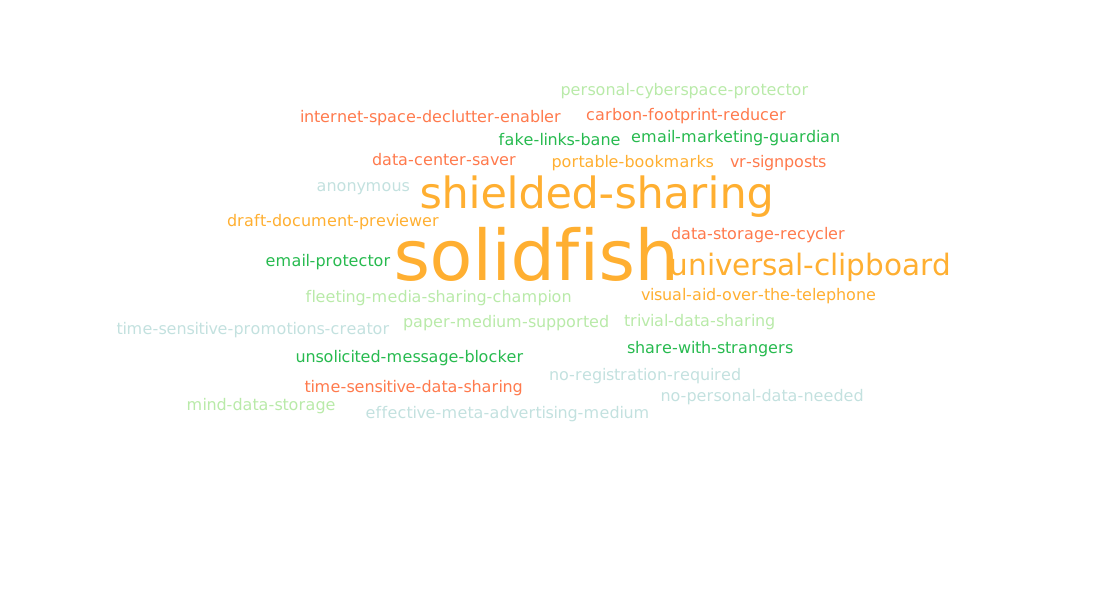
SolidFish word cloud

A code instead of another identity exchange

A Solid Code is a short nine-character public reference for a share. It can be read aloud, written down or passed through another channel without requiring the sender and recipient to first exchange personal contact details. The code identifies the share; it stays separate from an optional recipient password and the sender's management key.

See how Solid Codes work

Four beliefs behind every Solid Code

Privacy, safer sharing habits, fleeting data and environmental responsibility shape the way SolidFish is designed.

01

Fleeting by design

Not every exchange needs a permanent folder, shared workspace or long-lived account relationship. SolidFish gives useful-for-now information an intentional lifetime, with expiry, one-time access and sender deletion available to bring the handoff to an end.

02

Keep access and authority separate

The Solid Code is a public locator. A sender can optionally add a recipient password for opening, while a separate management key authorises sender-only actions such as extending expiry or deleting the share. Keeping those roles separate supports privacy without making the handoff harder to use.

03

Leave less unnecessary data behind

Shares have an explicit expiry, and stored objects enter the service cleanup process when recipient access ends according to the retention rules in the Privacy notice. The environmental idea is deliberately modest: if data is fleeting, avoiding another indefinite cloud copy is a small but worthwhile habit. Every little helps.

04

Files, notes and links

A share can contain supported files, notes and web links. Current item-count, size and file-type limits are shown in Create before activation. Original files remain distinct from any generated previews.

05

Pause before the click

Links shared through SolidFish can include destination information and, where available, a restricted preview before the recipient chooses to visit the site. That extra inspection step can help people notice unexpected or misleading destinations and build a safer habit around links. A preview is not a verdict that a site is safe, and destinations can change after previewing.

06

Guides and product notes

The SolidFish journal explores privacy, safer link habits, fleeting data, environmental responsibility, access controls and the product decisions behind them. Published articles are reviewed independently from the core product instructions.

A clear lifecycle from creation to cleanup.

Every share follows a visible lifecycle from creation to expiry or deletion.

1. CreateChoose files, a note, or links and set the package lifetime.
2. ProtectOptionally add recipient access controls.
3. SharePass the short Solid Code through a suitable channel.
4. ExpireThe package becomes unavailable automatically or is removed earlier by the sender.

Ready to share without the baggage?

Create a Solid Code without opening an account, or learn more about how the product works.

Explore how it works